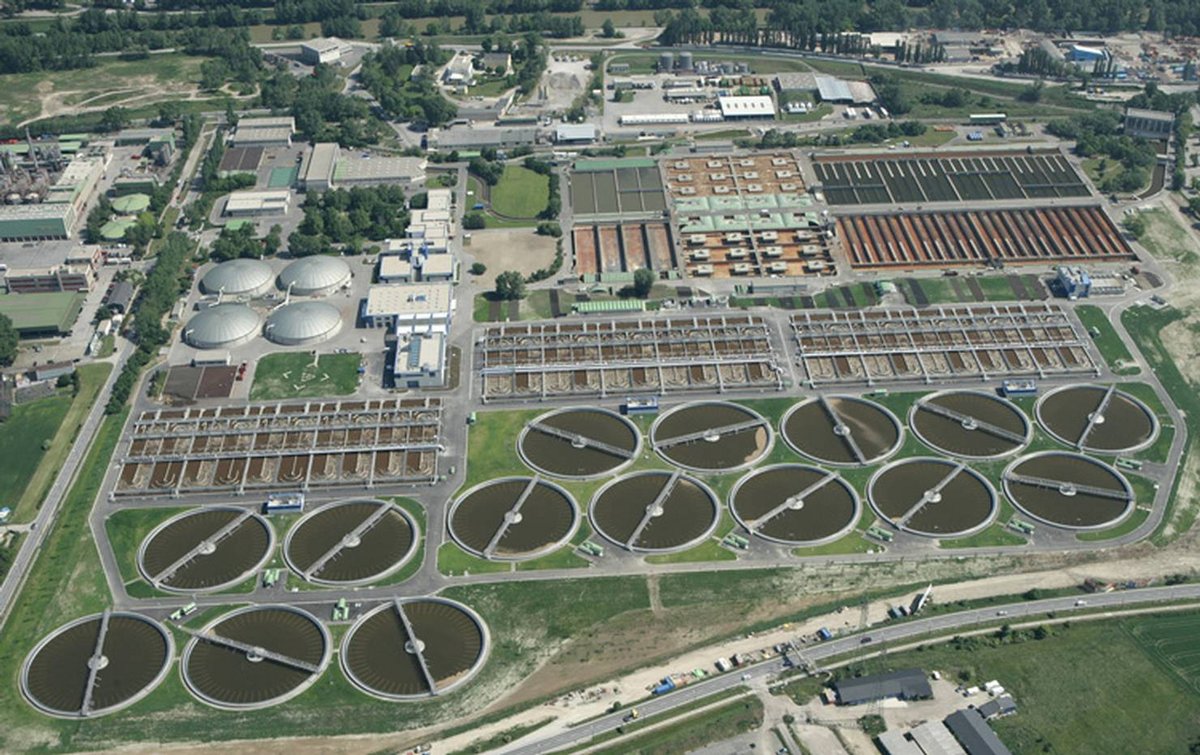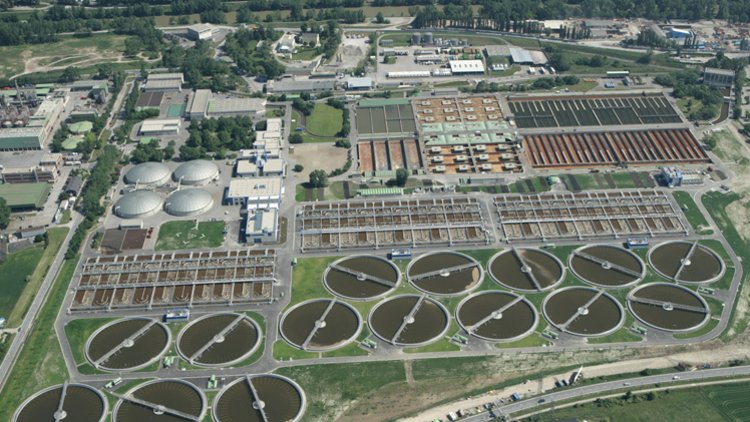
Vienna's main wastewater treatment plant is located in Simmering, the topographically lowest point of the city, near the canal mouth of the Danube. here is where all of vienna's municipal sewage and wastewater is treated.
On dry weather days, more than 500.000 m³ of wastewater is produced, an amount comparable to the channel flow of medium-sized river. It takes about twenty hours for the wastewater to pass through one mechanical and two biological treatment stages before running off in a purified condition into the danube.
Vienna’s main wastewater treatment plant was enlarged and upgraded in the years 2000 - 2005. The expansion consisted of the installation of a second biological treatment stage for eliminating nitrogen (nitrification and denitrification), which is connected to the biological treatment stage dating back to 1980. Cutting-edge technology increases the cleaning performance of the plant and essentially contributes to the city’s wastewater management, reconfirming Vienna’s reputation as an international role model of sustainable urban developmentVienna’s main wastewater treatment plant was enlarged and upgraded in the years 2000 - 2005. The expansion consisted of the installation of a second biological treatment stage for eliminating nitrogen (nitrification and denitrification), which is connected to the biological treatment stage dating back to 1980. Cutting-edge technology increases the cleaning performance of the plant and essentially contributes to the city’s wastewater management, reconfirming Vienna’s reputation as an international role model of sustainable urban development.
Mechanical treatment stage
Coarse materials, such as gravel and grit, are filtered out of the wastewater that flows into the plant via the main collectors.
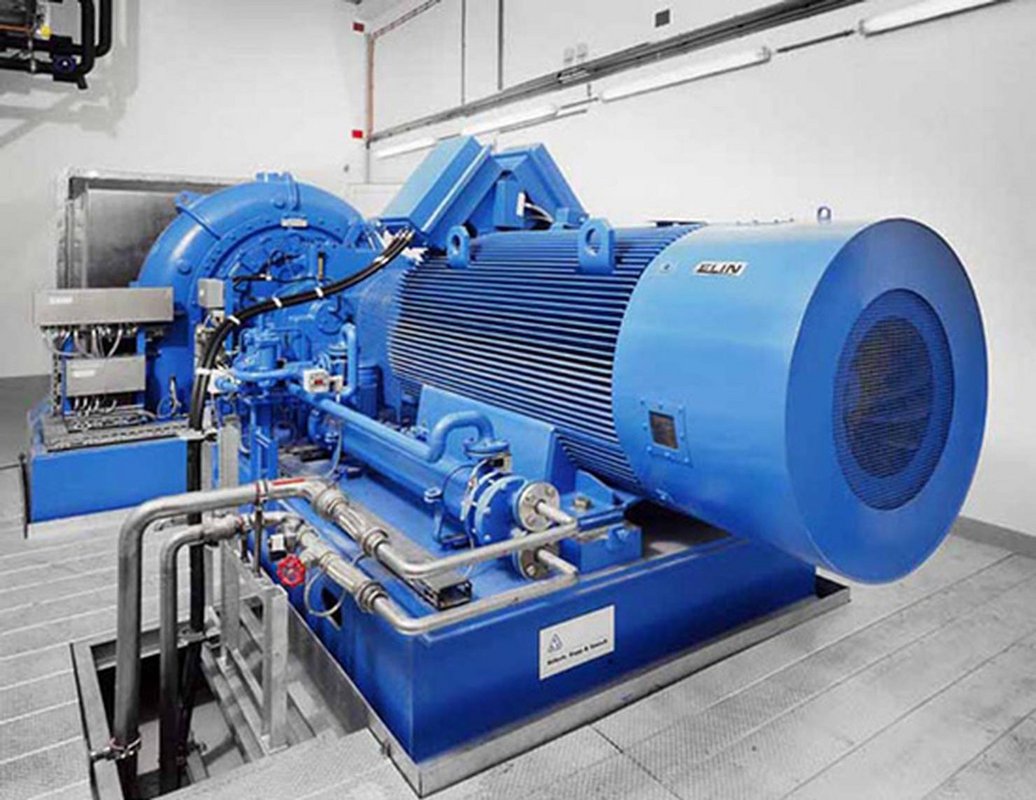
Spiral pumps lift the wastewater up to plant level so that it can flow through in a natural gradient.
Floating and suspended solids are sorted out by a strainer screen in the screening plant. The screenings are drained and transported to the incinerator in closed containers. In the downstream grit channel, fine solids, sand and ashes are removed. The grit chamber trappings are also burned after drainage.
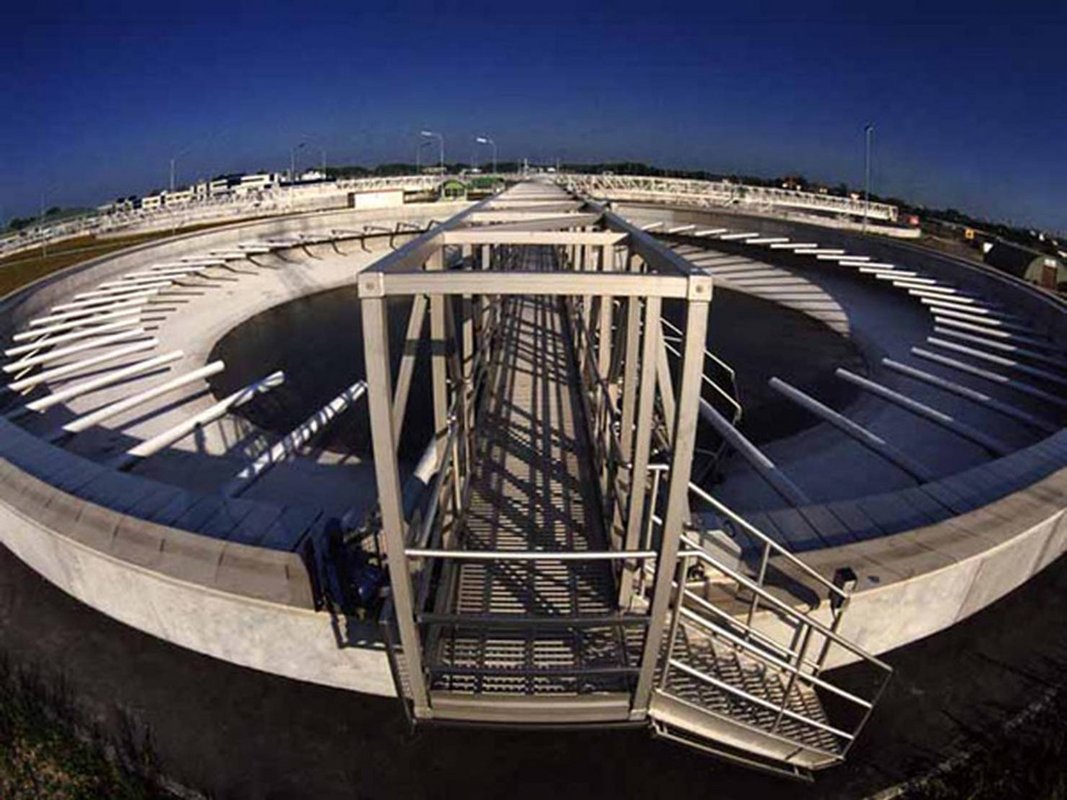
The last stage of the mechanical treatment of wastewater takes place in the primary clarifiers, each of which is accessible through an inlet channel. By decreasing the speed of flow, the floating solids that remain in the wastewater settle to the bottom of the tank as primary sludge. This sludge is pushed through scrapers in collecting channels and pumped to the thickeners. The mechanical treatment of the wastewater removes up to 30% of the contaminants.
First biological treatment stage
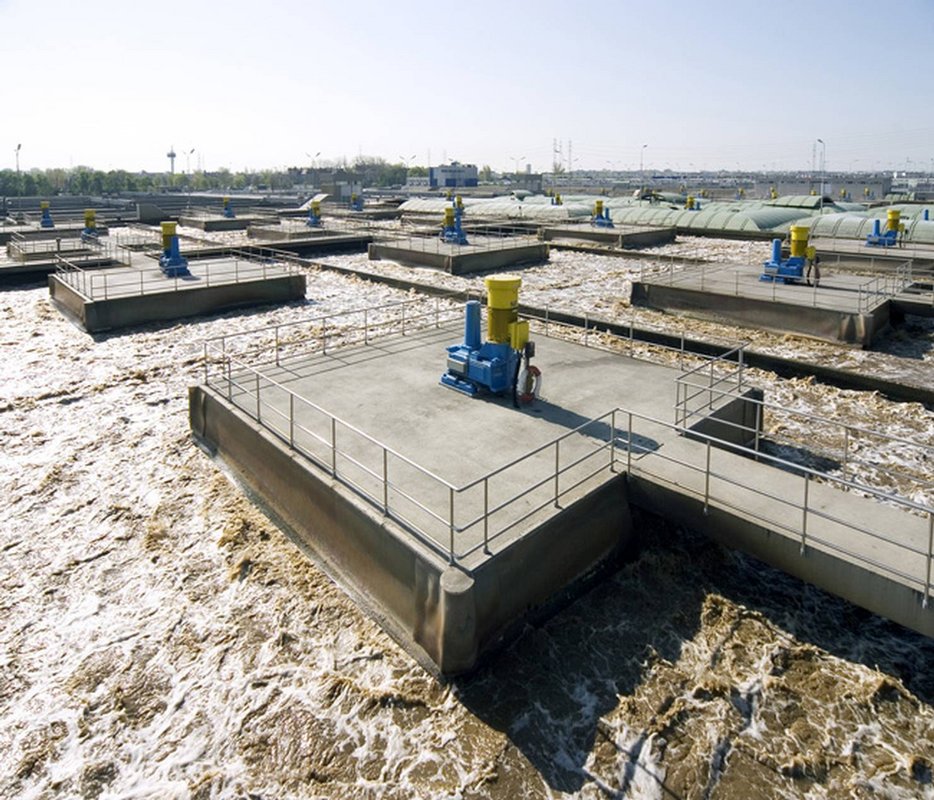
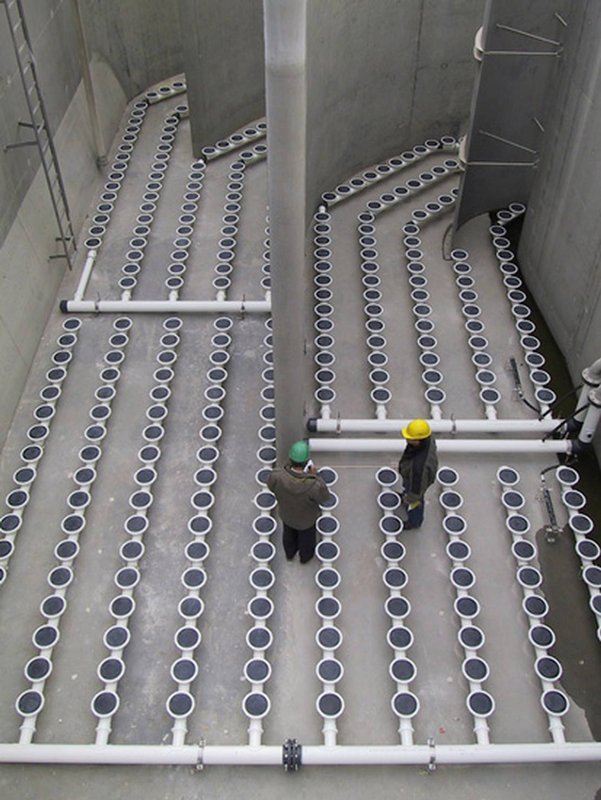
The following biological treatment stage is modelled on the biological self-cleaning capacity of natural bodies of water. In the aeration tanks, microorganisms – also referred to as "activated sludge" - degrade the dissolved, predominantly organic contaminants. The oxygen needed for the degradation process is provided by disc aerators.
Phosphate elimination with ferric sulphate takes place by dosing in the aeration tanks.
Activated sludge is separated from the pre-cleaned wastewater in intermediate clarifiers. The microorganisms settle together with the collected dirt as activated sludge. Part of the sludge (return sludge) is led back into the aeration tanks to speed up the concentration of microorganisms and to keep the degradation process intact. Surplus sludge is pumped into the thickeners.
From the intermediate clarifiers, the wastewater flows over toothed thresholds out into a channel that leads to the second biological treatment stage.
Second biological treatment stage
Wastewater from the first aeration stage and the return sludge from the second aeration stage are transported to the intermediate pumping station. From here, the wastewater and sludge are pumped into a channel equipped with mixing elements by submersible propeller pumps.
Because the wastewater flow is split up of after pre-treatment, phosphate elimination with ferric sulphate also takes place in this stage.
The wastewater is evenly divided into 15 aeration tanks of the second stage, which are grouped in three blocks. Each aeration tank of the second stage consists of three cascades. The first cascade represents an upstream unaerated denitrification tank, followed by two serial circulation tanks (cascades 2 and 3) where nitrification and denitrification take place simultaneously. Propeller-type agitators provide for regular flow and uniform mixing in the aeration tank. The aeration tanks are equipped with deep fine-bubble aerators; the aerated volume may be adjusted to the temperature and pollutant load. There is a vent zone connected to each aeration tank, from which the corresponding secondary clarifier is loaded.
The clarified wastewater is separated from the activated sludge in the 15 round secondary clarifiers. Every secondary clarifier is equipped with double scrapers and an immersed drain pipe and has a diameter of 64 metres. Part of the sludge is led back into the aeration tank (return sludge) to speed up the concentration of microorganisms and to keep the degradation process intact. Surplus sludge is pumped into the thickeners. Wastewater from the secondary treatment stage flows through the outlet channel into the Danube Canal. Part of the nitrate-containing run-off is led back into the first stage in dry weather to take advantage of the denitrification capacity there.
Wastewater sludge treatment
In the wastewater sludge thickeners, primary sludge and surplus sludge are thickened by gravity to a dry substance content of approx. 4% and are then pumped into the sludge treatment unit. After dewatering in centrifuges, the wastewater sludge is burned in fluidised-bed furnaces at 850°C.
Exhaust air treatment
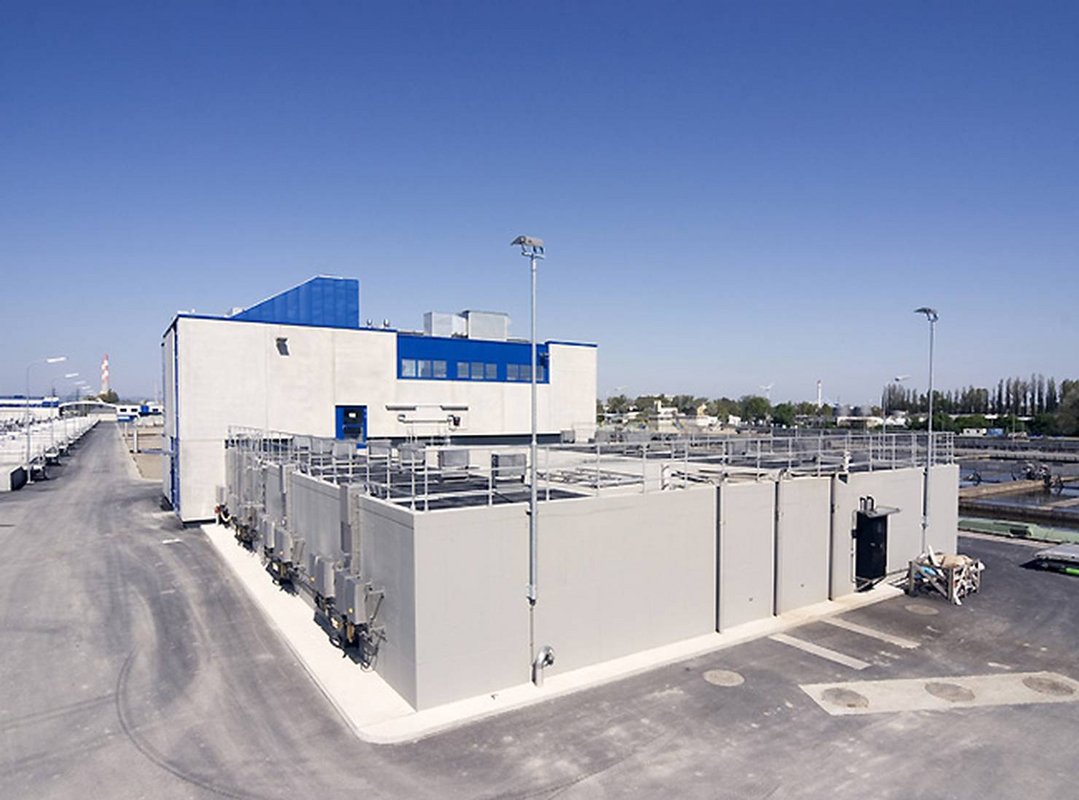
To avoid odour nuisance, the grit chamber, spiral pumps, sand trap, wastewater sludge thickeners and sludge channels are covered.
Employees constribute to environmental protection
The qualified employees of Vienna’s main wastewater treatment plant oversee the proper functioning of the plant and the control of all sophisticated processes round the clock. Staff in the corresponding labs monitor adherence to permitted emission levels as prescribed by law.