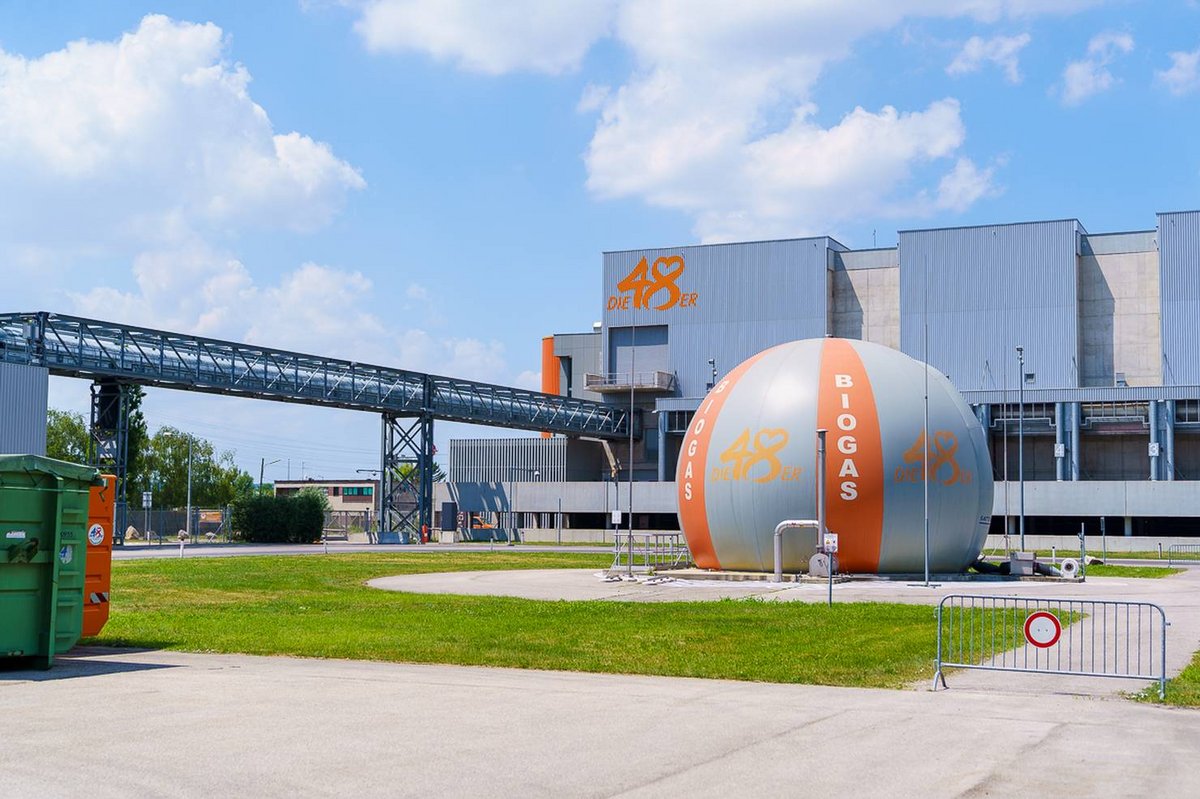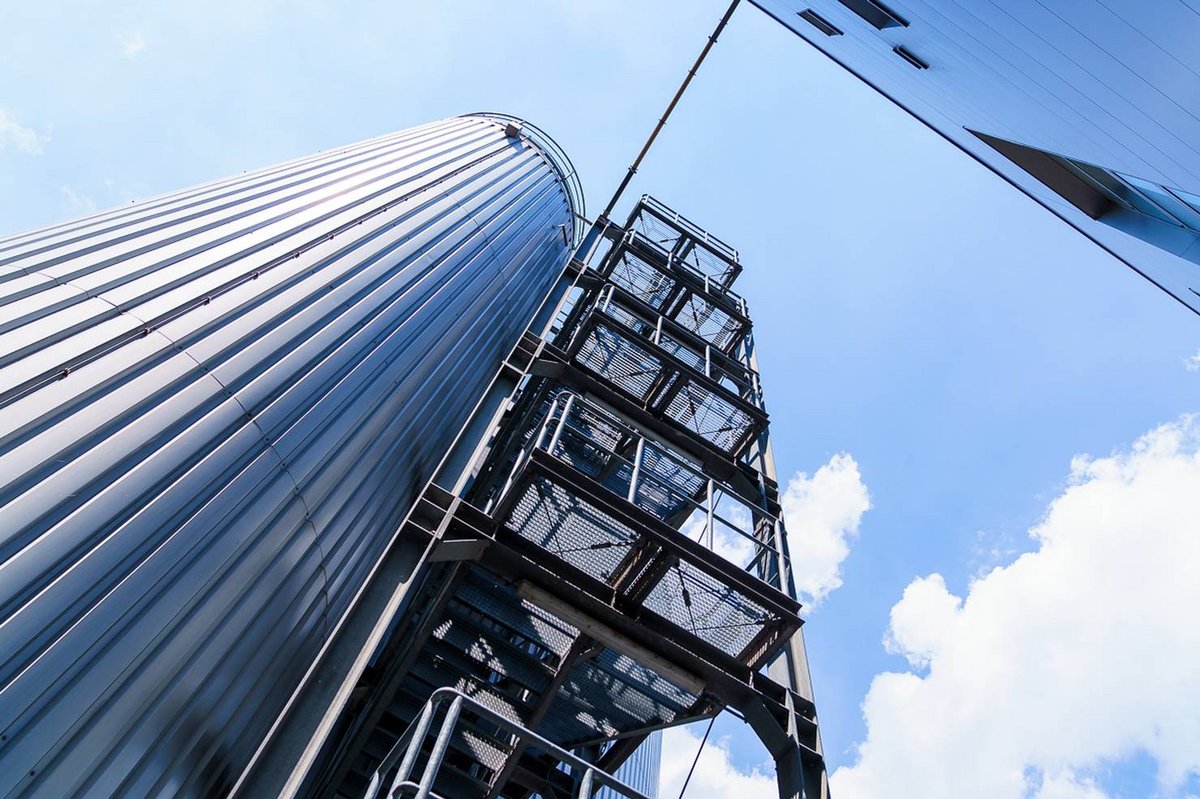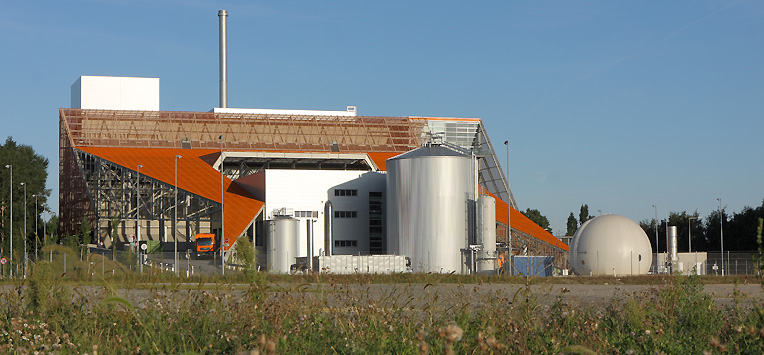
With the INAUGURATION OF Biogas VIENNA in autumn 2007, another high-tech FACILITY WENT into operation next to the WASTE INCINERATION PLANT PFAFFENAU IN Simmering; THUS FURTHER ENHANCING The CLOSED-LOOP CONCEPT OF THE CITY OF VIENNA's ecologically sound biowaste management system. the plant processes a total of 22,000 tonnes of kitchen and green waste per year..
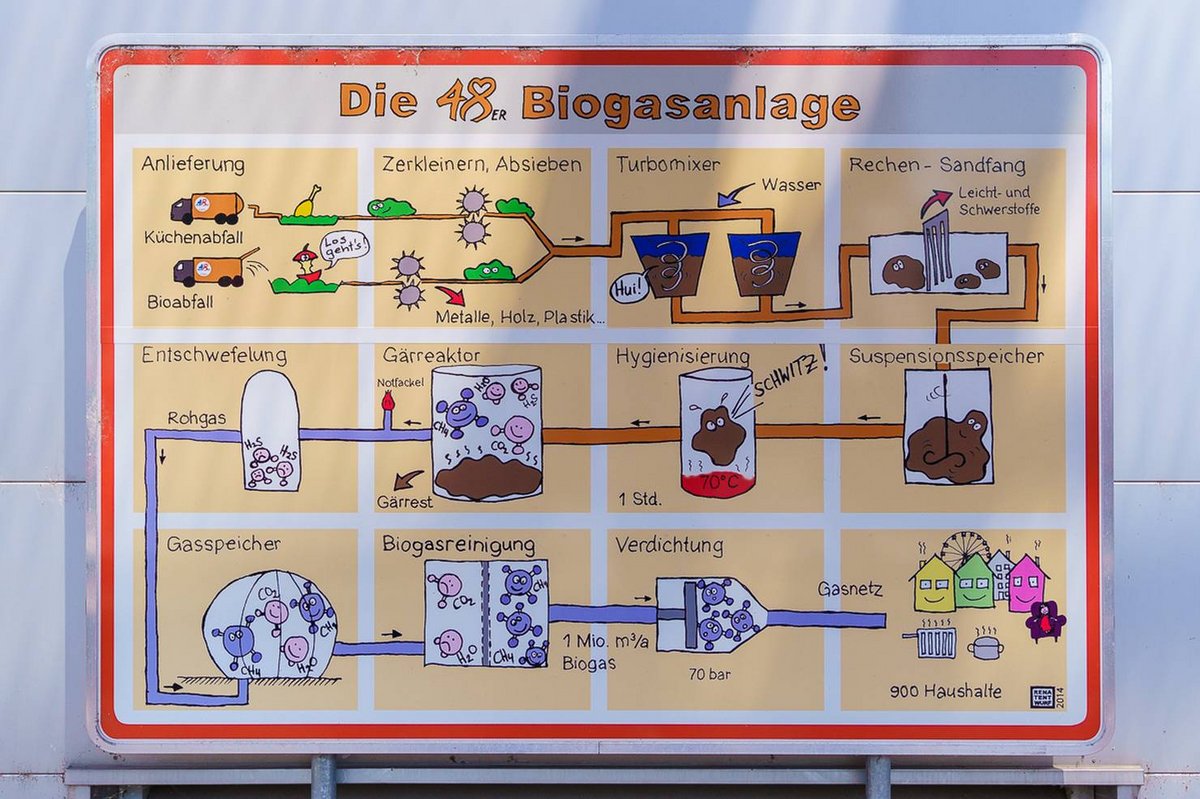
The new biogas upgrading facility uses a special process to convert biogas, which is produced from kitchen waste in the biogas facility in Simmering, into biomethane. Biomethane is subsequently fed into Vienna's public grid. The plant generates one million cubic metres of CO2-neutral biomethane out of 22.000 tonnes of organic kitchen waste per year, thereby supplying 900 Viennese households with eco-friendly "bio natural gas" and reducing CO2-emission by 3.000 tpa.
The input material is the biogas produced and desulphurised in the biogas facility. In order to be fed into the natural gas grid as biomethane, the biogas needs to be rid of carbon dioxide, remaining hydrogen sulphide, perpenes and siloxanes. This separation is carried out by a modern membrane separation process, ensuring that biogas with a methane content of 64 percent becomes high-purity biomethane with a methane content of 99 percent. After a diligent quality assurance procedure, biomethane is compressed to a feed pressure of up to 70 bar and delivered to the customers of Wien Energie.
The upgrade of biogas into biomethane, which is subsequently fed into the natural gas grids, has become increasingly important in recent years and offers many advantages. Biomethane is a full-fledged substitute of natural gas, covering the entire range of natural gas applications. Wien Energie customers are supplied with CO2-free gas, which is used for gas heating systems, gas hobs and as a vehicle fuel. This represents a further step towards increasing the share of renewable energy sources and reducing gas imports for the City of Vienna. Further processing into biomethane now also allows to efficiently cater to actual demand due to the possibility of on-site energy storage.
The use of biomethane in places where heat consumption is high significantly increases the share of externally usable heat energy, which in turn leads to an increase in the overall efficiency of biogas utilisation.
Biogas facility (Biogas Vienna)
- Vienna’s first biogas facility
- Commissioning in 2007
- Wet mechanical waste treatment and subsequent fermentation
- Input: 22 million kg of mainly kitchen waste per year
- Output: 1.7 million Nm³ of biogas per year
- Methane content (CH4) of biogas: 55-70%
Biogas upgrading facility
- Vienna’s first biogas upgrading facility
- Commissioning in May 2015
- Upgrade of biogas using membrane technology
- Output: 1 million cubic meters of "bio natural gas" annually
- Methane content (CH4) of biomethane: 99%
- Biogas fed into Vienna’s natural gas grid
- Supply of over 900 households
Annual CO2 savings: 3 million kg